Natural vs Synthetic Loofah: A Buyer's Guide for Retail Brands
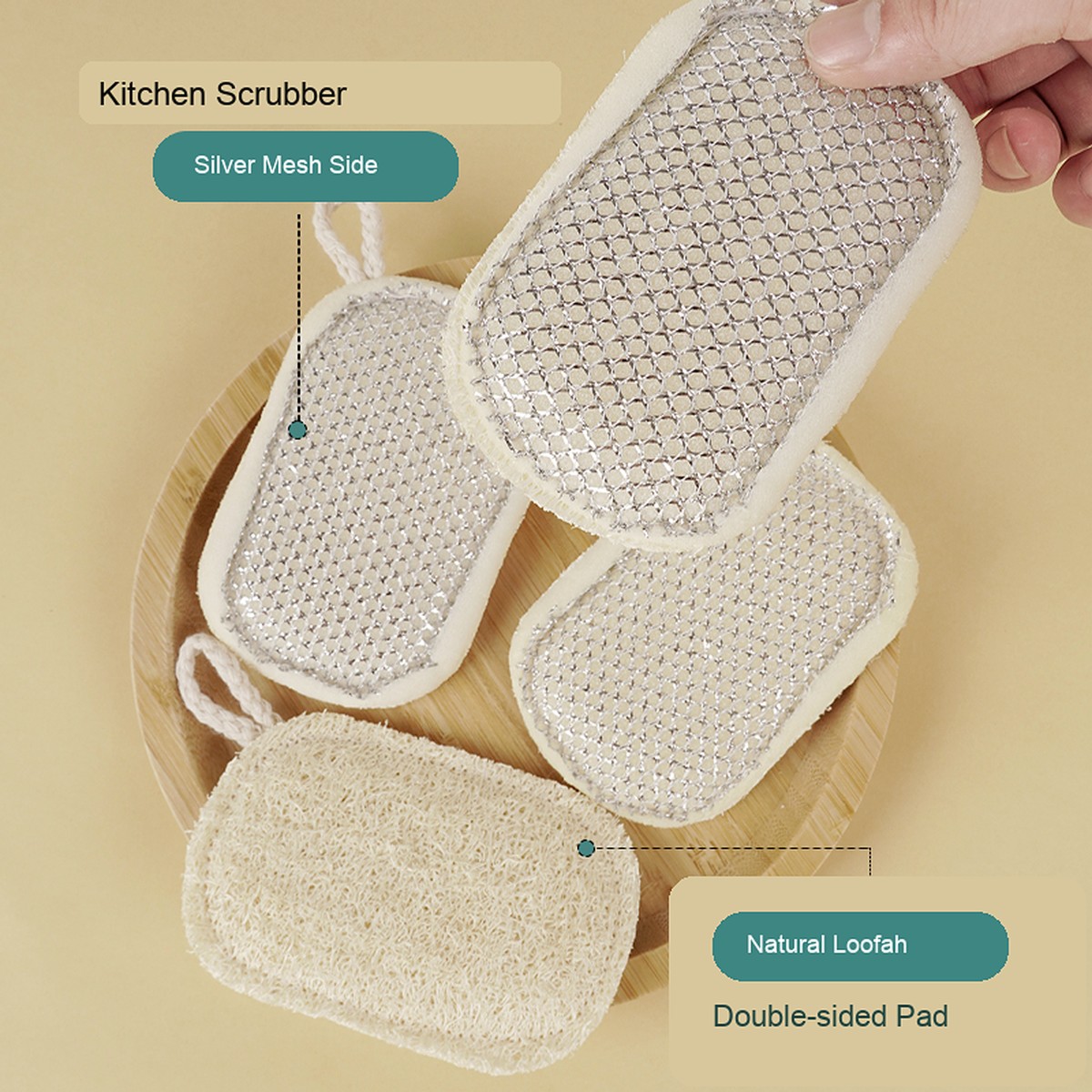
Retail buyers should choose natural or synthetic loofah based on brand position, claim risk, product use, and supply consistency, not price alone. Natural loofah supports plant-based and plastic-free assortments, while synthetic options may fit low-cost, color-specific, or highly uniform programs with less natural variation.
Direct answer
Retail buyers should choose natural or synthetic loofah based on brand position, claim risk, product use, and supply consistency, not price alone. Natural loofah supports plant-based and plastic-free assortments, while synthetic options may fit low-cost, color-specific, or highly uniform programs with less natural variation.
## Should a retail brand choose natural or synthetic loofah?
Retail buyers should choose natural or synthetic loofah based on brand position, claim risk, product use, and supply consistency, not price alone. Natural loofah supports plant-based and plastic-free assortments, while synthetic options may fit low-cost, color-specific, or highly uniform programs with less natural variation.
The decision is especially important for bath, spa, zero-waste, hotel, and eco gift lines. A natural product can strengthen an environmental story, but it requires acceptance of agricultural variation. A synthetic sponge can deliver bright colors and narrow shape tolerance, but it may not support the same biodegradable or plastic-free positioning.
If your brand wants to test natural options, start with a base [natural loofah bath sponge](/products/natural-loofah-bath-sponge), compare accessories such as [facial loofah pad](/products/facial-loofah-pad), and review broader [custom private label loofah](/categories/custom-private-label-loofah) options for retail packaging.
## Material Composition
Natural loofah comes from the dried fibrous interior of the luffa gourd. The fiber network is made by the plant as the fruit matures, then it is cleaned, dried, cut, sorted, and packed. That is why natural loofah has visible pores, slight color variation, and different density grades.
Synthetic loofah products are usually made from polymer mesh, foam, or blended cleaning materials. They can be colored, molded, laminated, and cut with tighter visual uniformity. That helps some mass retail programs, but it also changes the material story. A synthetic bath puff may be inexpensive and bright, yet it does not carry the same plant-fiber position.
For claims and product education, the natural side should be described accurately. NC State Extension describes luffa sponges as the fibrous interiors of mature sponge gourd fruits and notes that many environmentally conscious consumers appreciate luffa as natural, renewable, and biodegradable. That is a strong retail story when the product and packaging support it.
## Performance Comparison Table
Use the table as a first filter before sampling. Final selection should still be tested with your exact product use and packaging.
| Factor | Natural loofah | Synthetic loofah | |---|---|---| | Material | Dried plant fiber from luffa gourd | Polymer mesh, foam, or blended synthetic material | | Durability | Good when dried between uses; varies by density | Often consistent by formula and construction | | Cleaning strength | Medium to strong exfoliation or scrubbing by grade | Tunable by mesh, foam, or abrasive layer | | Skin feel | Natural texture; softens when wet | Can be very soft or very uniform | | Biodegradability | Supports biodegradable positioning when unblended and claim-reviewed | Usually not suitable for biodegradable claims | | Visual consistency | Natural color and pore variation | High color and shape consistency | | Cost | Depends on grade, sorting, labor, and packaging | Often lower for high-volume simple items | | MOQ | Lower for standard natural items; higher for custom sorting and private label | Often driven by tooling, material color, and packaging | | Best fit | Eco retail, spa, natural bath, soap, gift sets | Bright promotional items, low-cost packs, exact color programs |
## Consumer Demand Trends
Retail buyers are not choosing natural materials in a vacuum. The [NYU Stern Center for Sustainable Business Sustainable Market Share Index](https://www.stern.nyu.edu/experience-stern/about/departments-centers-initiatives/centers-of-research/center-sustainable-business/research/csb-sustainable-market-share-index) tracks consumer packaged goods marketed with sustainable attributes. Its latest public summaries show sustainability-marketed CPG products contributing a large share of category growth and gaining market share over time.
For a loofah buyer, the lesson is practical. Natural loofah is not automatically the right SKU for every shelf, but it can support the language many consumers already look for: plant based, plastic-free, low-waste, natural fiber, and biodegradable where substantiated. It also pairs well with soap, bamboo, sisal, cellulose, recycled paper packaging, and other natural product cues.
The trend does not remove the need for quality control. Eco buyers still reject mold, odor, inconsistent density, and weak packaging. The brand story gets the product considered; the sample quality gets it reordered.
## Labeling and Claims: What You Can Say
Safe claim language starts with what the product actually is. "Natural loofah fiber," "plant-based sponge," "made from luffa gourd fiber," and "plastic-free sponge" may be appropriate when the item is unblended and packaging does not contradict the claim. "Biodegradable" should be used carefully because destination markets may require specific conditions, proof, or disclaimers.
Avoid broad claims that the documents cannot support. "Compostable," "zero impact," "chemical-free," "antibacterial," and "organic" can create regulatory or retailer review problems if not substantiated. The U.S. EPA's [plastic recycling and composting FAQ](https://www.epa.gov/trash-free-waters/frequently-asked-questions-about-plastic-recycling-and-composting) is a useful reminder that composting and recycling language depends on material, facilities, and conditions.
For private label packaging, approve the product first and the claim wording second. If your brand sells in several countries, review claims by destination before printing. A wording that is safe in one market may need a qualifier in another.
## When Synthetic Still Makes Sense
Synthetic loofah can still make sense for exact color matching, very low retail price points, promotional bundles, rapid seasonal programs, or products that must look identical in every unit. It can also be useful when the customer expects a soft mesh bath puff rather than a plant-fiber exfoliating sponge.
Synthetic material may also be easier for programs with strict shape tolerance and minimal natural variation. If your retail buyer will reject normal plant color differences, synthetic could reduce disputes. The tradeoff is that the product may not fit natural, biodegradable, or plastic-free positioning.
Some brands carry both. Natural loofah can sit in the eco bath, spa, soap, or gift range, while synthetic items serve color-led or price-led shelves. The key is to avoid mixing the stories. A natural SKU should look, feel, and be documented as natural.
## Sample Strategy for Retail Brands
Request a sample kit that compares natural, lightly bleached, and unbleached variants. Include at least one bath sponge, one pad, and one packaging reference. Test each sample for dry odor, wet feel, drying speed, edge finish, density, and visual grade.
If you plan to launch under your own label, connect the sample review to a [private label loofah set](/products/private-label-loofah-set) or [loofah eco gift set](/products/loofah-eco-gift-set) concept. This keeps material selection, packaging, claims, and carton planning in one project instead of five disconnected decisions.
## FAQ
### Is natural loofah always better than synthetic loofah?
No. Natural loofah is better for plant-fiber and eco-positioned lines. Synthetic loofah may be better for exact colors, very low price points, and high visual uniformity.
### Can natural loofah be labeled biodegradable?
Often it can support biodegradable positioning when the item is unblended natural fiber, but claim wording should be reviewed for the destination market and packaging should not contradict it.
### Does natural loofah last as long as synthetic loofah?
Durability depends on density, use, rinsing, and drying between uses. A well-selected natural grade can perform well, but synthetic materials may be more uniform by construction.
### What sample variants should a retail buyer request?
Ask for natural, lightly bleached, and unbleached samples, plus the intended package. Review odor, density, wet feel, drying, visual grade, and claim wording before approving bulk production.
## Get a loofah sample kit for your product line
Request a kit with natural, bleached, and unbleached variants for bath, pad, soap, or gift-set use. We will help you compare material story, performance, packaging, and claim wording before you commit to a retail SKU.